
A surreal, haunting, and darkly funny exploration of grief, silence, and the courage it takes to break tradition.
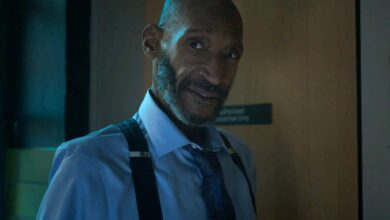
Rungano Nyoni’s On Becoming a Guinea Fowl is a film of quiet detonations, soft footsteps leading to emotional sinkholes, ritual dances performed on shifting ground. Set within a middle-class Zambian home turned temporary funeral parlor, it begins with a bizarre, uncanny image: a young woman in a Missy Elliott costume staring at her dead uncle’s body on a moonlit road. From that moment forward, Nyoni peels back the gauze of grief to expose not healing, but rot.
Susan Chardy, in a stunning debut, plays Shula with devastating restraint. She doesn’t perform grief, she navigates through it, a tight-lipped survivor forced to mourn a man who stole more than time from the women in her family. As preparations for Uncle Fred’s funeral unfold, so too does a larger reckoning. Secrets are shared, truths whispered in hallways and screamed in bathrooms, as Shula and her cousins slowly piece together that Fred wasn’t just problematic, he was predatory.
Nyoni doesn’t shout her message. Instead, she composes it through layers: the absurdity of funeral customs, the suffocating expectations of gendered silence, the way trauma becomes familial inheritance. David Gallego’s cinematography turns every room into a haunted space, soft lighting casting hard shadows, corridors stretching into oblivion, water rippling through impossible dreamscapes. The surreal elements, Shula’s younger self haunting the corners of the frame, a spectral guinea fowl echoing across her psyche, don’t distract. They clarify.
The ensemble, led by a riotous Elizabeth Chisela as the unfiltered cousin Nsansa, imbues every scene with emotional texture. Whether drinking in defiance or crying in quiet solidarity, the women of this story carry the weight of the unsaid. The men, often oblivious or indifferent, orbit the pain without ever acknowledging it. That omission is Nyoni’s sharpest commentary.
The color palette of On Becoming a Guinea Fowl is both lush and restrained, reflecting the tension between tradition and transformation. Muted earth tones dominate the mourning spaces, beiges, browns, and faded greens, mirroring the emotional weight pressing down on the characters. But Nyoni and cinematographer David Gallego strategically punctuate this palette with flashes of vibrant color: Shula’s vivid red hoodie, Nsansa’s boldly patterned dresses, the surreal deep blues of water in dream sequences. These bursts don’t just add visual flair, they signal resistance, memory, and the flickers of individual identity pushing against the collective silence.
If I Am Not a Witch announced Nyoni as a vital new voice, Guinea Fowl confirms her range. It’s less satirical, more simmering. There are narrative stumbles, moments where metaphor gets muddled, but the emotional core never loses clarity. This is not a film about forgiving the dead. It’s about warning the living.
By the time Bupe’s recorded confession turns into a ghostly chorus, we realize the film isn’t about closure. It’s about refusing to stay silent. Like its title bird, it shrieks when danger circles. On Becoming a Guinea Fowl is an arresting, often uncomfortable act of cultural exorcism, one that dares to ask whether some traditions are worth mourning at all.
4/5 Stars